
Product Lifecycle Management (PLM) initiatives are often viewed as technology projects. In reality, they are business transformation initiatives that happen to be enabled by technology.
One of the most common reasons PLM programs struggle is that organizations begin with the software instead of the business.
Successful implementations require a deep understanding of the products being developed, the processes that support them, and the unique challenges of the manufacturing industry they serve.
Every Manufacturing Industry Is Different
Although the same PLM platform can support multiple industries, no two manufacturing sectors operate in the same way.
For example:
- Automotive has high-volume production, rapid product iterations, and complex supplier networks.
- Aerospace & Defense prioritizes configuration management, regulatory compliance, and long product lifecycles.
- Medical Devices operate within stringent regulatory frameworks, requiring rigorous documentation and traceability.
- Industrial Machinery focuses on engineer-to-order processes, product customization, and long-term serviceability.
- Electronics manufacturers face rapid innovation cycles, component obsolescence, and global supply chain complexity.
Applying the same implementation strategy across every industry often creates unnecessary challenges.
Why PLM Programs Struggle
When technology is implemented without sufficient business context, organizations commonly experience:
- Low user adoption
- Process confusion
- Limited productivity improvements
- Misaligned business expectations
- Costly transformations with limited return on investment
These outcomes are rarely caused by the PLM platform itself.
More often, they result from solutions that were not designed around the organization’s business processes, industry requirements, and operational goals.
PLM Is About More Than Technology
PLM is not simply a system for managing product data.
It is the foundation for connecting people, processes, and information throughout the entire product lifecycle.
To deliver measurable business value, a PLM strategy must consider:
- Industry-specific engineering practices
- Regulatory and compliance requirements
- Product development workflows
- Supply chain collaboration
- Change and configuration management
- Long-term business objectives
Technology should enable these capabilities—not define them.
Understanding the Problem Before Designing the Solution
The most successful digital transformation initiatives begin with understanding how the business operates before selecting or configuring technology.
When organizations invest time in understanding their products, processes, people, and industry challenges, they are better positioned to design solutions that improve collaboration, accelerate innovation, and deliver lasting business value.
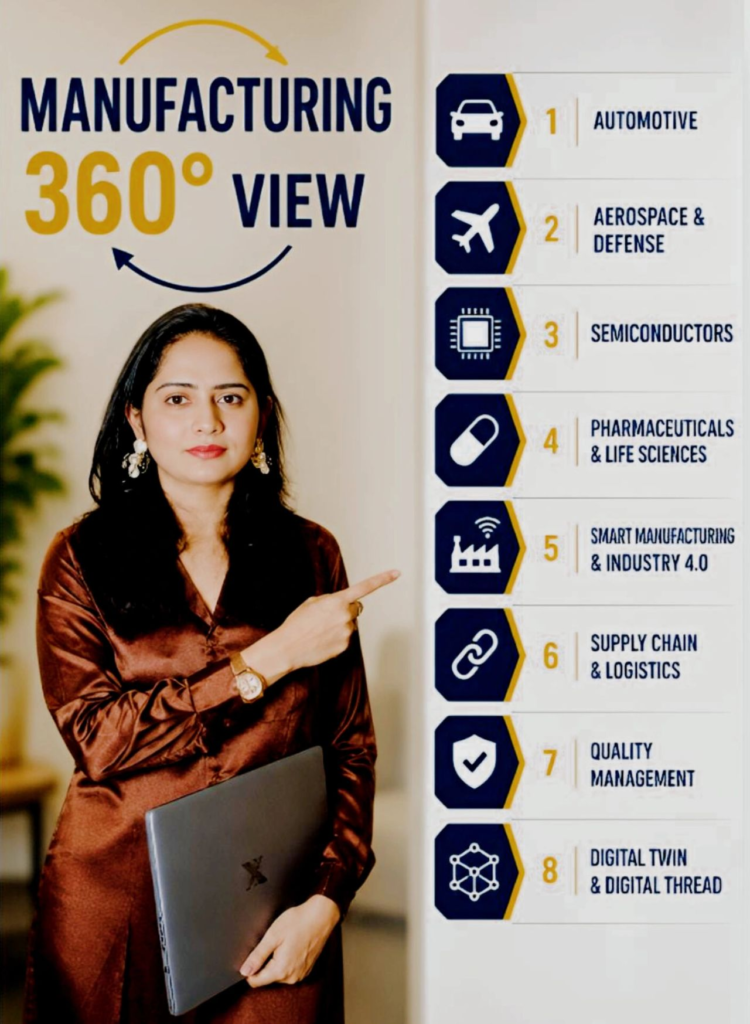
About the Manufacturing 360° Series
This article is the first in the Manufacturing 360° series—a collection of insights exploring the realities of modern manufacturing and the factors that drive successful digital transformation.
In upcoming articles, we’ll explore:
- Industry-specific manufacturing challenges
- Why PLM programs succeed—or struggle
- Emerging trends in digital engineering
- Lessons from real-world transformation initiatives
- What manufacturing leaders should prioritize for the future
Digital transformation doesn’t begin with selecting the right platform.
It begins with understanding the right problem.